Make Witch Hunts Great Again Hat
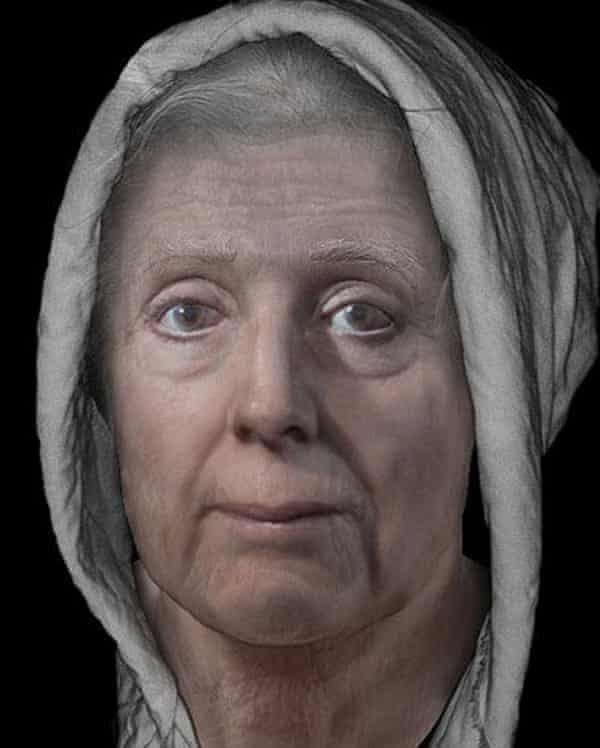
L ilias Addie's body was piled into a wooden box and cached beneath a half-tonne sandstone slab on the foreshore where a nighttime N Sea laps the Fife coast. More than than a hundred years later on, she was exhumed by opportunistic Victorian gravediggers and her basic – unusually big for a adult female living in the early on 18th century – were later on put on testify at the Empire exhibition in Glasgow. Her simple bury was carved into a wooden walking stick – engraved "Lilias Addie, 1704" – which ended upward in the collection of Andrew Carnegie, and then the richest man in the earth.
Information technology was no sort of burying, merely from the perspective of the thousands of women accused of, and executed for, witchcraft in early modern United kingdom, Lilias's fate had a degree of nobility.
"Most women were burned, rather than buried, their identities erased past authorities and families out of fright and shame," says Claire Mitchell QC, who is candidature for a legal pardon for, and monument to, the estimated 2,558 Scots who were executed in the cruel centuries of femicide after Scotland'south 1563 Witchcraft Human action (the same year England enacted its own bloody statute). She adds: "This lack of historical record makes information technology harder as a social club to accept the reckoning with history that we dearly demand to have."
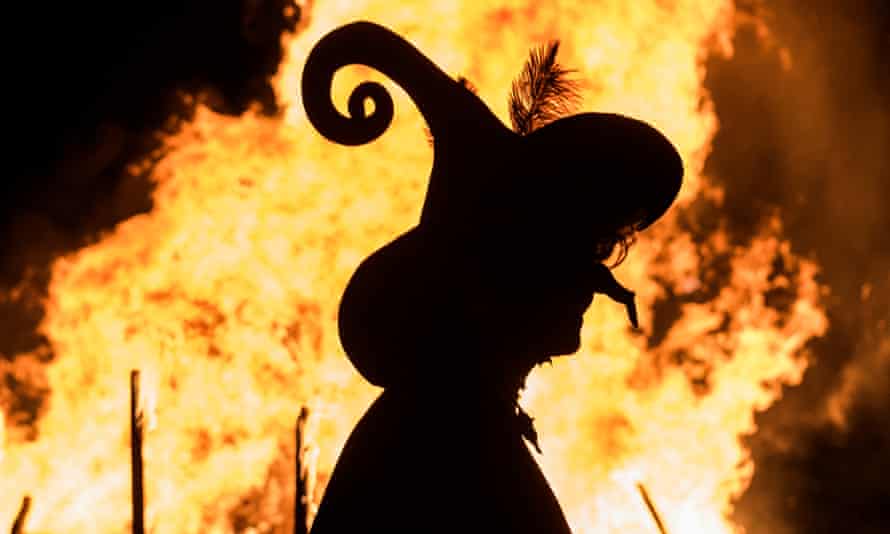
If it's a instance of cultural amnesia, it'south hiding in plain sight. Halloween 2022 and online fast-way retailers are jolly with "witchy inspo": cross-fusions of witch costumes and bunny girl outfits; miniature pointed hats worn at a jaunty bending, with a lipglossed pout. Meanwhile, designer Viktor & Rolf riffs on "wicked witches" in its haute couture shows (raven-winged leathers and laser eyes); "witchcore" trends on social media (an interior and lifestyle aesthetic centred on nighttime interiors, gemstones and, oddly, bread-baking); and influencers including the Modernistic Witch peddle a novel iteration of magical capitalism (spell-casting for business curse-removal, anyone?).
Our cultural reappraisal of the European witch-hunts began in the 1960s, when second moving ridge feminists reinterpreted these pogroms as patriarchy's "original sin": vicious, iii-century campaigns that destroyed ancient female practices and means of income, from traditional midwifery to the ale business organization (once dominated past ale women, who wore pointed hats to signify their merchandise and kept cats to chase rodents abroad). For Marxist theorist Silvia Federici, author of the seminal Caliban and the Witch , the witch-hunts were the terminal volley in the defeat of artisan peasants and the rise of capitalist wage labour. Here was women's "slap-up historic defeat", on whose called-for stakes the bourgeois ideals of dependent, domestic womanhood were forged.
Hartmut Hegeler, an activist German pastor, wants his nation to come to terms with the estimated 25,000 women murdered in its particularly bloody 1500-1782 witch persecution. Hegeler feels that popular culture'due south fascination with witchiness – seen in the resurgent popularity in central and northern Europe of the spring Walpurgis night festival, where witches are ceremonially burned at the pale – is not a route to restoring murdered women'southward dignity.
"These convicted people could not have committed the crimes they are accused of," Hegeler says, "flying on a broom for bedevilment, causing harm by magic to conditions and fornicating with the devil. We must recognise injustice in the by, otherwise we will not recognise injustice today."
He has called on European countries to pardon women executed for witchcraft, out of superstition, suppression, creature thievery and spite, and to erect memorials to them, every bit Cologne and Leipzig have done.
Mitchell and her co-apostle Zoe Venditozzi want too to run across a shift away from witches' spiritual exceptionalism – dark arts, herby hubble-bubble and magical seer-ing – to a more than historically authentic reframing of those persecuted equally witches.
"These were mostly merely women who were leading their lives," says Venditozzi, a secondary school teacher in north-east Fife, "and for whatever reason they got accused of witchcraft… They could have been you or I."
Lilias was defendant of casting curses on children, according to a preserved cache of Scottish court documents, past a woman named Jean Bizet, who owed money to the defendant. Lilias's unusual physical features – her preternaturally long limbs and pronounced overbite – possibly sealed her fate. Her watery burial beneath a stone, the documents reveal, was designed to end her trunk being "revenired", or returned to life from the dead, by the devil. She wasn't burned at the stake, as she died in prison.
Popular history also elides the executed who were men: fifteen% of the Scots victims and ten% of the estimated 800 who perished by drowning or at the pale between 1603 and 1735 in England'southward witch trials, Mitchell notes.
Venditozzi cites an erected memorial to the dead of the witch hunts of Orkney that sums up the everywoman- (and indeed everyman-) ness of the victims. It reads, simply: "They wur cheust folk" (they were only folk).
"That's how nosotros should properly think of these people," she says. "As merely folk similar you and me."
Across the world, a entrada for a cultural reckoning, for a aboveboard look at those children's book characters and campy costumes, for monuments and due apologies, gathers pace.
In Catalonia, 150 history professors are signatories to a petition No eren bruixes (They were not witches) to educate Catalan children nearly their province'south femicidal history.
In the US, a class of thirteen- and 14-twelvemonth-olds at North Andover heart school in Massachusetts led successful efforts this yr to place a woman omitted from a 2022 monument to the ten women put to death in Salem'south infamous witch trials.
Sixty-9 German city and town councils take exonerated the victims of witchcraft trials in their towns.
Beneath Pendle Colina in Lancashire social justice organisation Idle Women has planted a "physic garden" of medicinal herbs in tribute to the lost knowledge of women healers, who were frequently elevation of witch-hunters' hitting lists. The site commemorates that in 1612 nine women and two men from the surrounding area were charged for witchcraft.
Nor is the persecution consigned to history. According to India's National Crime Records Bureau, 2,500 Indians were chased, tortured and killed in witch-hunts between 2000 and 2016. Feminist campaigners against modernistic-solar day ritualised killings of "witches" in Bharat and effectually the world are demanding that witch executions in the global due south – including in Saudi Arabia, the Democratic Democracy of Congo, South Africa, Tanzania and Nigeria – be seen in continuum with the European witch-hunts.
In that location are, subsequently all, eerie similarities in the nature of these attacks: women accused of fornication with the devil, casting evil eyes and spoiling crops, who are hunted, drowned, lynched and burned.
If you're heading out trick-or-treating this calendar week with your besom and pointy hat, spare a thought for Lilias and the tens of thousands of unnamed like her. And if you cast a spell, make this your need of the spirits: that one day Lilias, and club's conscience, will exist laid to remainder.
Source: https://www.theguardian.com/uk-news/2021/oct/24/why-the-witch-hunt-victims-of-early-modern-britain-have-come-back-to-haunt-us
0 Response to "Make Witch Hunts Great Again Hat"
Post a Comment